
SUMMARY
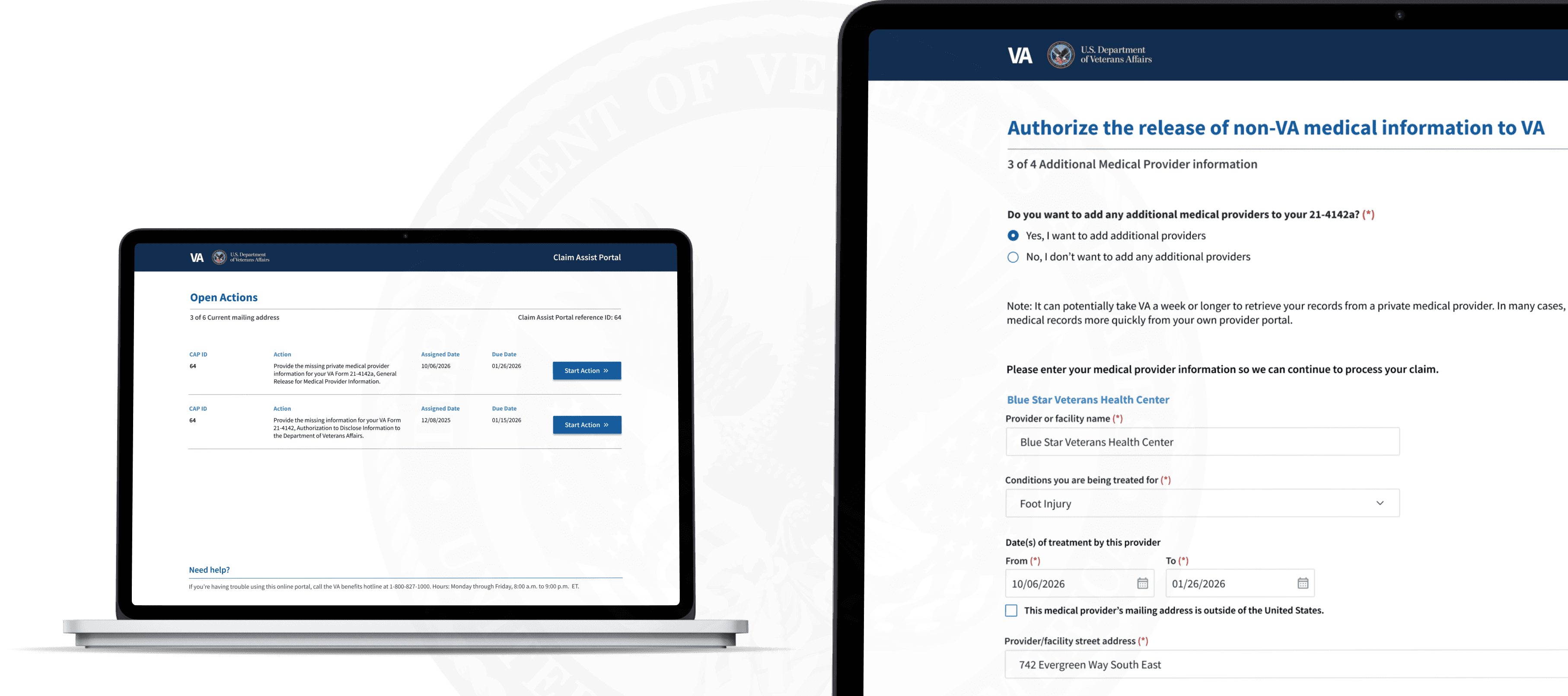
The Claims Assist Portal helped claims processors review and move Veteran benefits claims forward through a secure digital workflow. I designed the foundational design system and interface patterns that translated complex federal processes into scalable, accessible, and easy-to-navigate experiences.
MY ROLE
As the sole designer on a growing SaaS platform supporting the U.S. Department of Veterans Affairs, I introduced a design system to address inconsistencies across features, slow handoffs to engineering, and critical accessibility gaps.
Rather than building a system upfront, I worked directly within real product flows—identifying patterns, abstracting components, and defining tokens as they emerged. This ensured the system remained practical, lightweight, and immediately usable within a complex federal environment.
Grounded in WCAG AA and Section 508 compliance, the system establishes a scalable foundation for delivering consistent, accessible experiences to veterans while improving design velocity and strengthening collaboration between design and engineering.
CONSISTENT UI
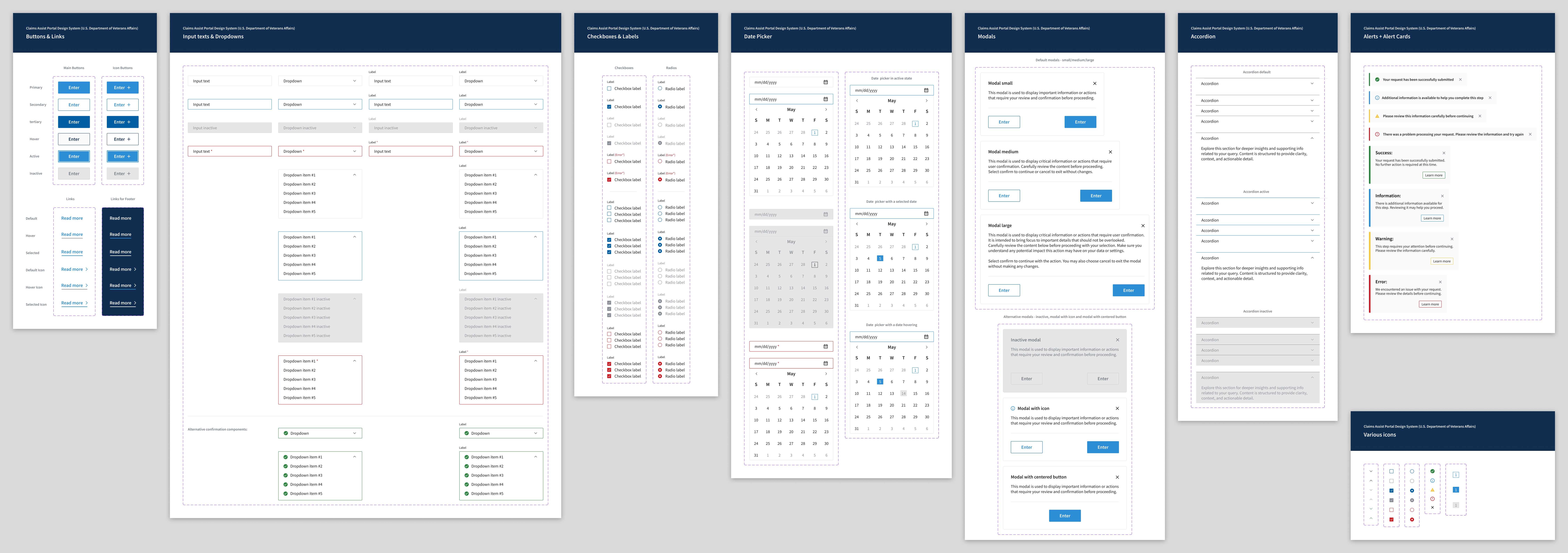



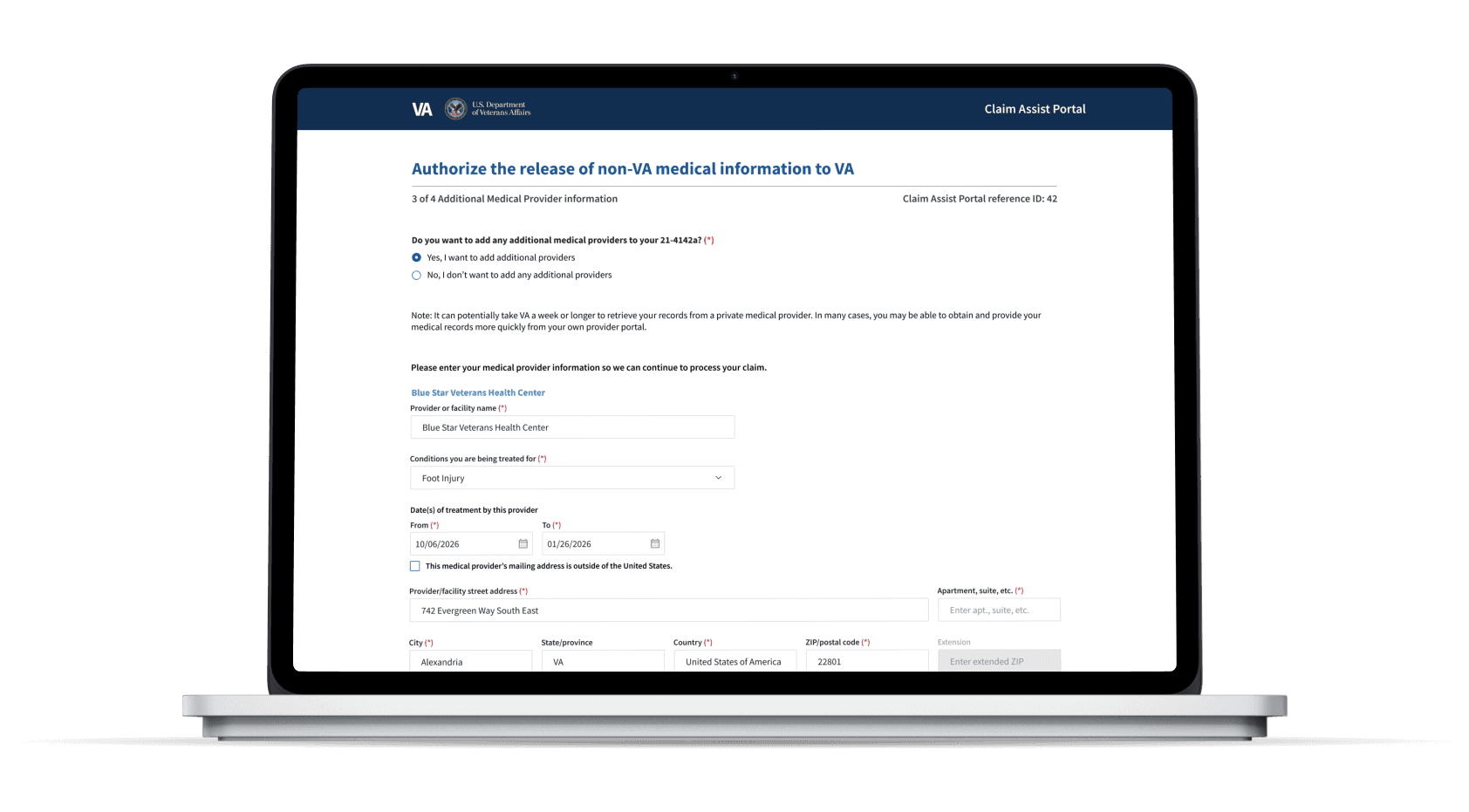
With the foundation in place, I translated typography, color, and layout variables into a set of reusable UI components—including inputs, dropdowns, accordions, buttons, checkboxes, radio groups, and date pickers—each designed with clear states, accessibility in mind, and consistent behavior. Standardizing these components reduced visual inconsistencies and created a shared language for design and engineering, enabling faster implementation and more scalable feature development.
INTERNAL MEMO
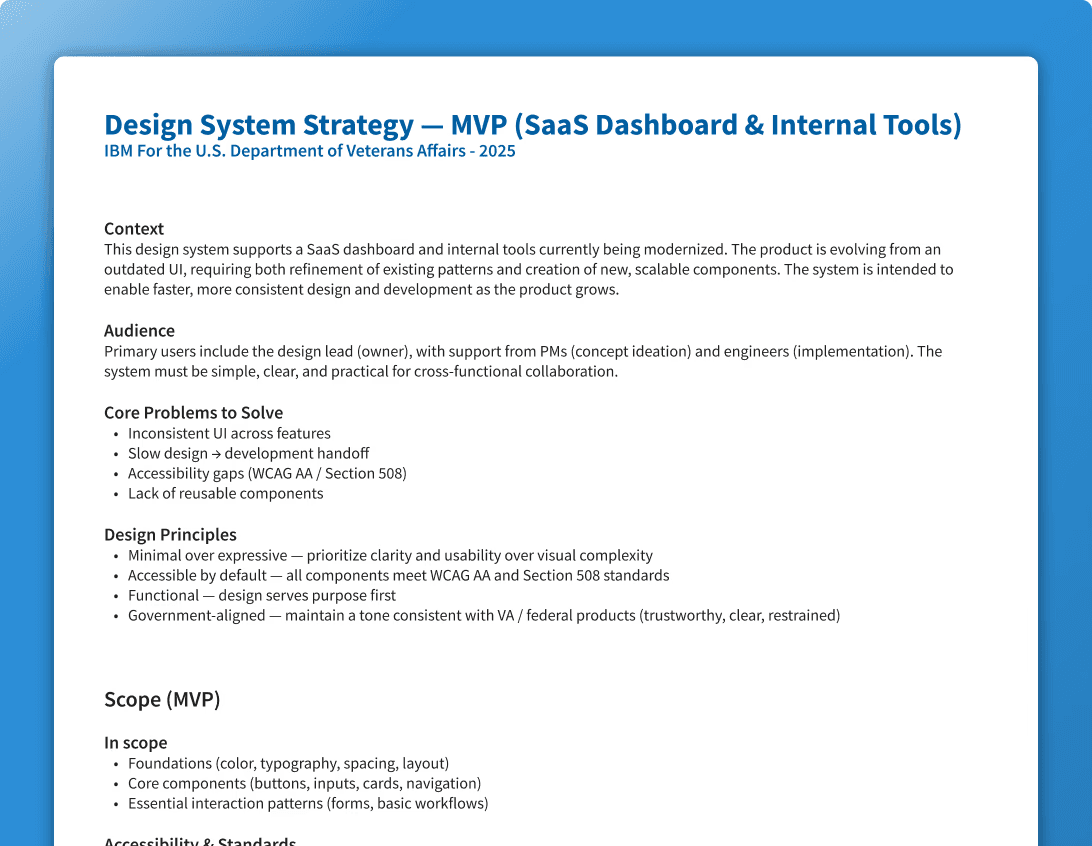
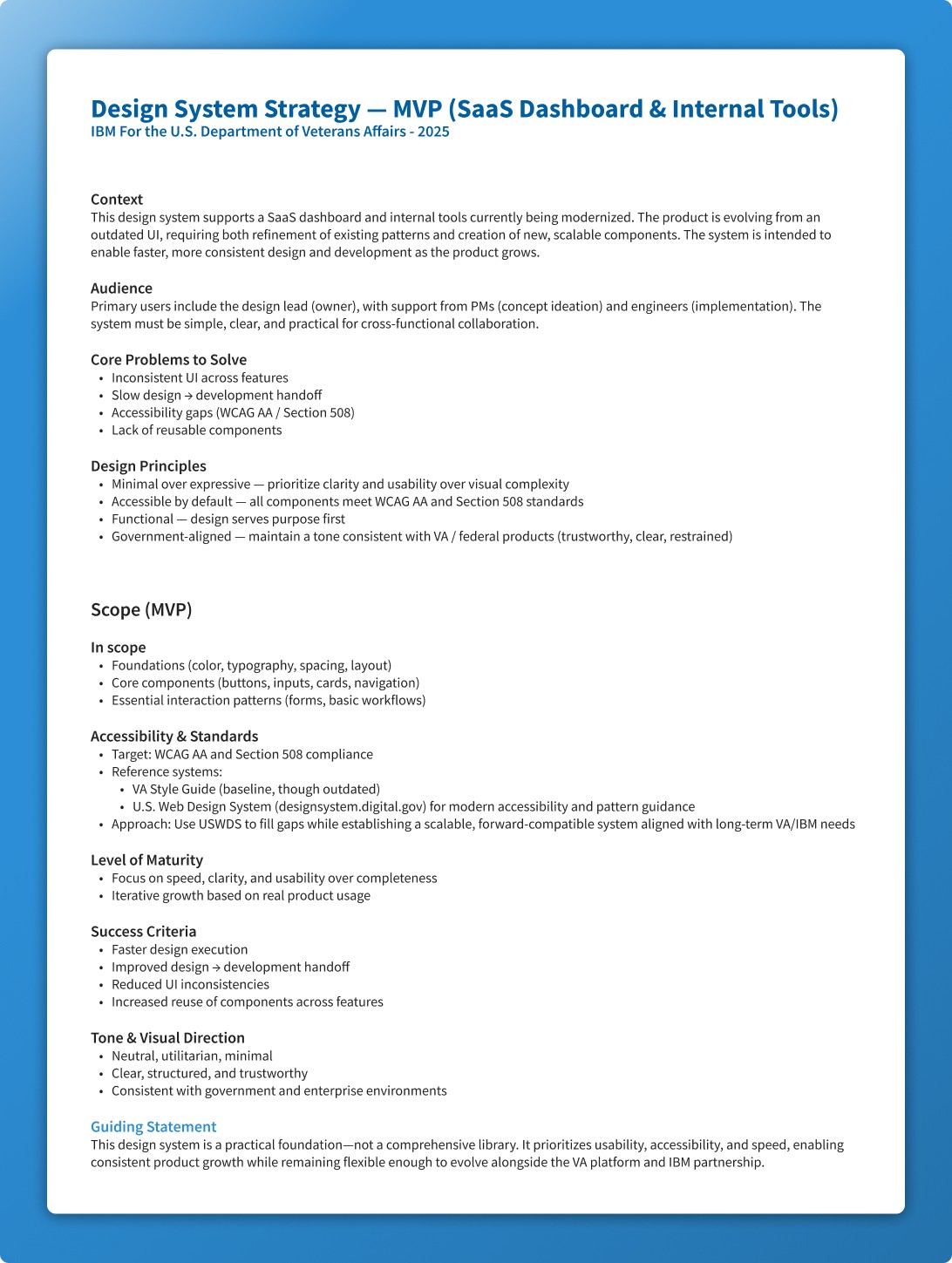
To ensure consistency and avoid overbuilding, I created a short internal strategy memo to guide the design system from the start. This helped align decisions around scope, accessibility, and priorities, keeping the system focused on speed, usability, and real product needs as it evolved.
Turning patterns into a system
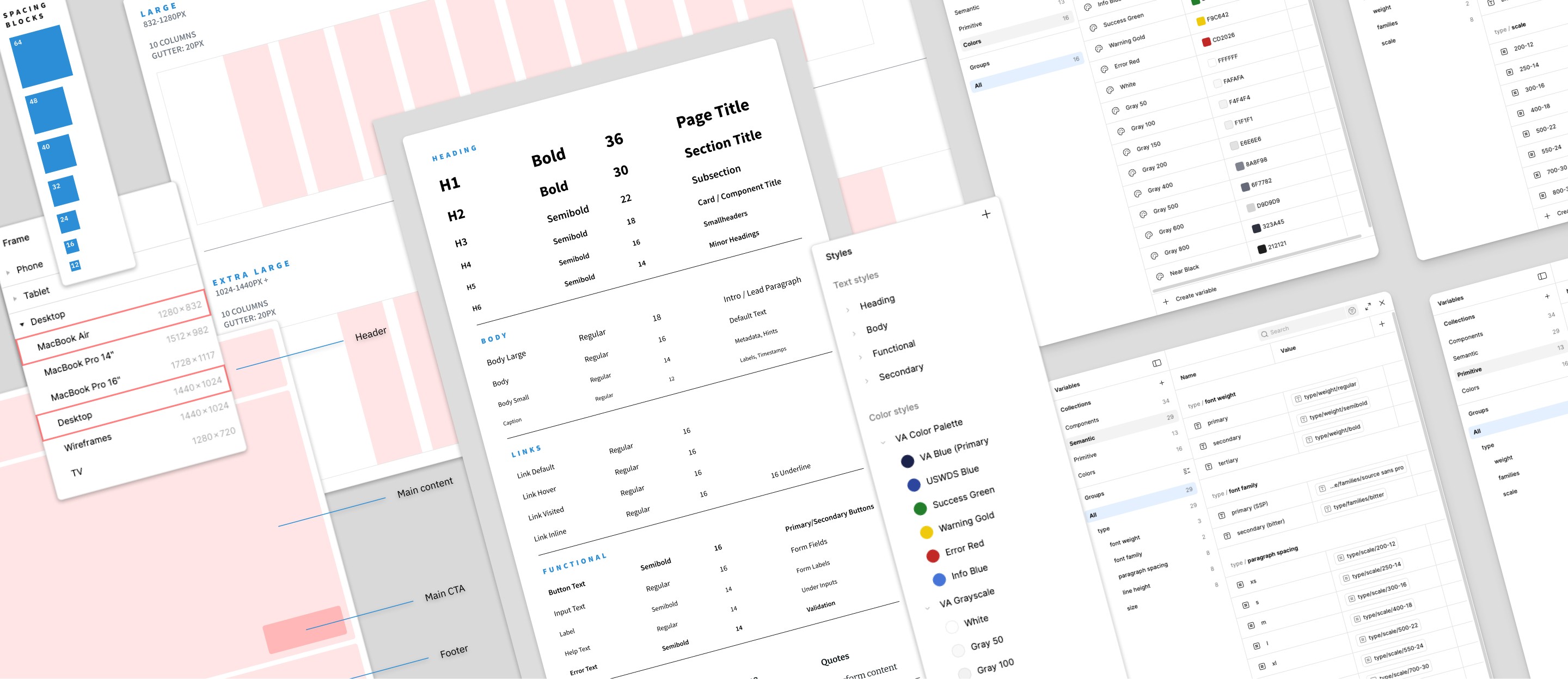
I established a foundation of typography, color variables, and layout systems—structured across primitive, semantic, and component layers—to ensure consistency, scalability, and accessibility, while identifying and addressing gaps in the VA design guidance.
SUMMARY
The Claims Assist Portal helped claims processors review and move Veteran benefits claims forward through a secure digital workflow. I designed the foundational design system and interface patterns that translated complex federal processes into scalable, accessible, and easy-to-navigate experiences.
OVERVIEW
As the sole designer on a growing SaaS platform supporting the U.S. Department of Veterans Affairs, I introduced a design system to address inconsistencies across features, slow handoffs to engineering, and critical accessibility gaps.
Rather than building a system upfront, I worked directly within real product flows—identifying patterns, abstracting components, and defining tokens as they emerged. This ensured the system remained practical, lightweight, and immediately usable within a complex federal environment.
Grounded in WCAG AA and Section 508 compliance, the system establishes a scalable foundation for delivering consistent, accessible experiences to veterans while improving design velocity and strengthening collaboration between design and engineering.
INTERNAL MEMO
To ensure consistency and avoid overbuilding, I created a short internal strategy memo to guide the design system from the start. This helped align decisions around scope, accessibility, and priorities, keeping the system focused on speed, usability, and real product needs as it evolved.
BUILDING THE FOUNDATION
I established a foundation of typography, color variables, and layout systems—structured across primitive, semantic, and component layers—to ensure consistency, scalability, and accessibility, while identifying and addressing gaps in the VA design guidance.
CONSISTENT UI
With the foundation in place, I translated typography, color, and layout variables into a set of reusable UI components—including inputs, dropdowns, accordions, buttons, checkboxes, radio groups, and date pickers—each designed with clear states, accessibility in mind, and consistent behavior. Standardizing these components reduced visual inconsistencies and created a shared language for design and engineering, enabling faster implementation and more scalable feature development.
FROM SYSTEM TO PRODUCT
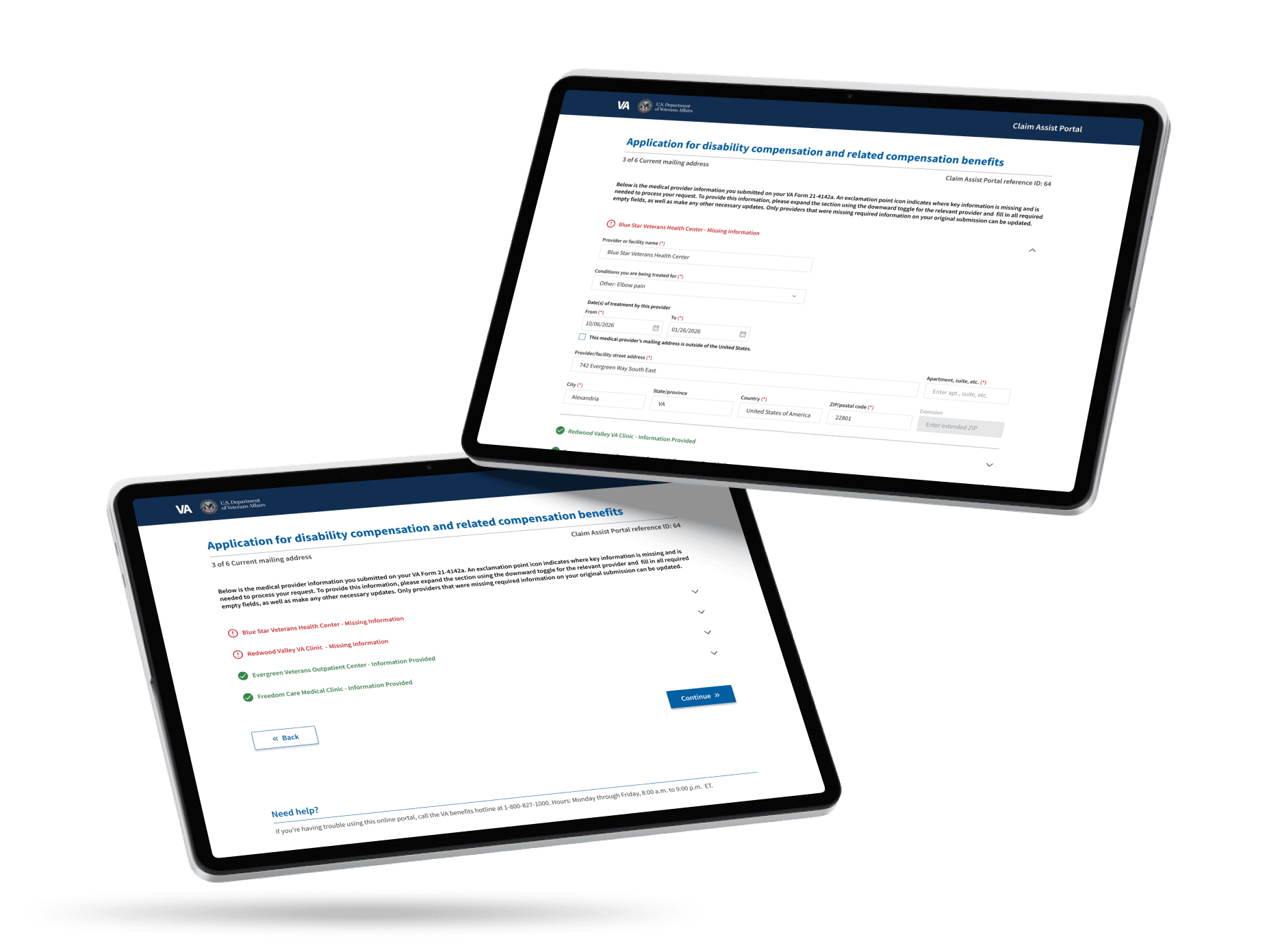
The design system was applied across multiple shipped screens, enabling consistent UI patterns, improved accessibility, and faster design-to-development workflows. This ensured a cohesive experience while supporting scalable feature development.
FROM SYSTEM TO PRODUCT
The design system was applied across multiple shipped screens, enabling consistent UI patterns, improved accessibility, and faster design-to-development workflows. This ensured a cohesive experience while supporting scalable feature development.
IMPACT
The design system enabled the Claims Assist Portal (CAP) to scale quickly with consistency and accessibility built in from the start. Standardized components and patterns reduced design friction and improved speed across delivery. In the first six months, over 30,000 claims were successfully submitted through CAP, reflecting strong adoption across core workflows. The system also improved collaboration between design and engineering, streamlining handoff and reducing UI inconsistencies. At a broader level, VA-reported data indicates a 63% reduction in claims backlog following the introduction of digital tools like CAP —suggesting meaningful operational impact. As CAP continues to evolve, the system provides a stable foundation for scaling new features while maintaining a cohesive, accessible user experience.
IMPACT
The design system enabled the Claims Assist Portal (CAP) to scale quickly with consistency and accessibility built in from the start. Standardized components and patterns reduced design friction and improved speed across delivery.
In the first six months, over 30,000 claims were successfully submitted through CAP, reflecting strong adoption across core workflows. The system also improved collaboration between design and engineering, streamlining handoff and reducing UI inconsistencies. At a broader level, VA-reported data indicates a 63% reduction in claims backlog following the introduction of digital tools like CAP —suggesting meaningful operational impact. As CAP continues to evolve, the system provides a stable foundation for scaling new features while maintaining a cohesive, accessible user experience.

© 2025 All rights reserved
Sites
Work
Profile
Archive
Contact
Substack