Introduction

Travel has shaped the way I think about design long before I worked in UX.

Growing up internationally, spending years backpacking across Asia, and documenting experiences through photography taught me to pay attention to movement, routines, and the small moments of friction that shape how people experience the world. Over time, onebag travel became less about minimalism and more about flexibility — the ability to move freely, adapt quickly, and stay open to spontaneity.

That perspective naturally carried into how I evaluate products.

Most travel gear reviews focus on first impressions: a bag arrives, gets packed once at home, used for a day or two, and reviewed as if the experience is fully understood. But products reveal themselves over time. Long train rides, repeated packing cycles, unfamiliar cities, changing climates, rushed airport transitions, and daily routines expose details that short-term testing simply cannot.

My approach borrows heavily from UX research and ethnographic observation. Instead of evaluating products in controlled environments, I document how they perform across real-world use over weeks or months of travel. I pay attention to friction points, behavioral patterns, adaptability, comfort, accessibility, organization systems, and how products evolve through repeated interaction.

Whether I’m traveling through remote environments or navigating dense urban routines, I view gear as part of a larger experience system. The same principles that shape good UX — clarity, usability, trust, flexibility, and reduced cognitive load — also shape how we move through the world physically.

This work sits at the intersection of travel, observational research, and product experience. It reflects the same mindset I bring to my UX practice: understanding how design supports people not just at first use, but across lived experience over time.

Selected Research & Brand Collaborations

My work spans long-form product evaluations, field-tested travel reports, visual storytelling, and observational research across travel and lifestyle products. These projects combine UX research methods with real-world use, often documented over extended periods of travel and day-to-day routines.

Selected work includes:

  • An 8-page UX-style product evaluation report for Bellroy focused on long-term usability, organization systems, and urban travel workflows


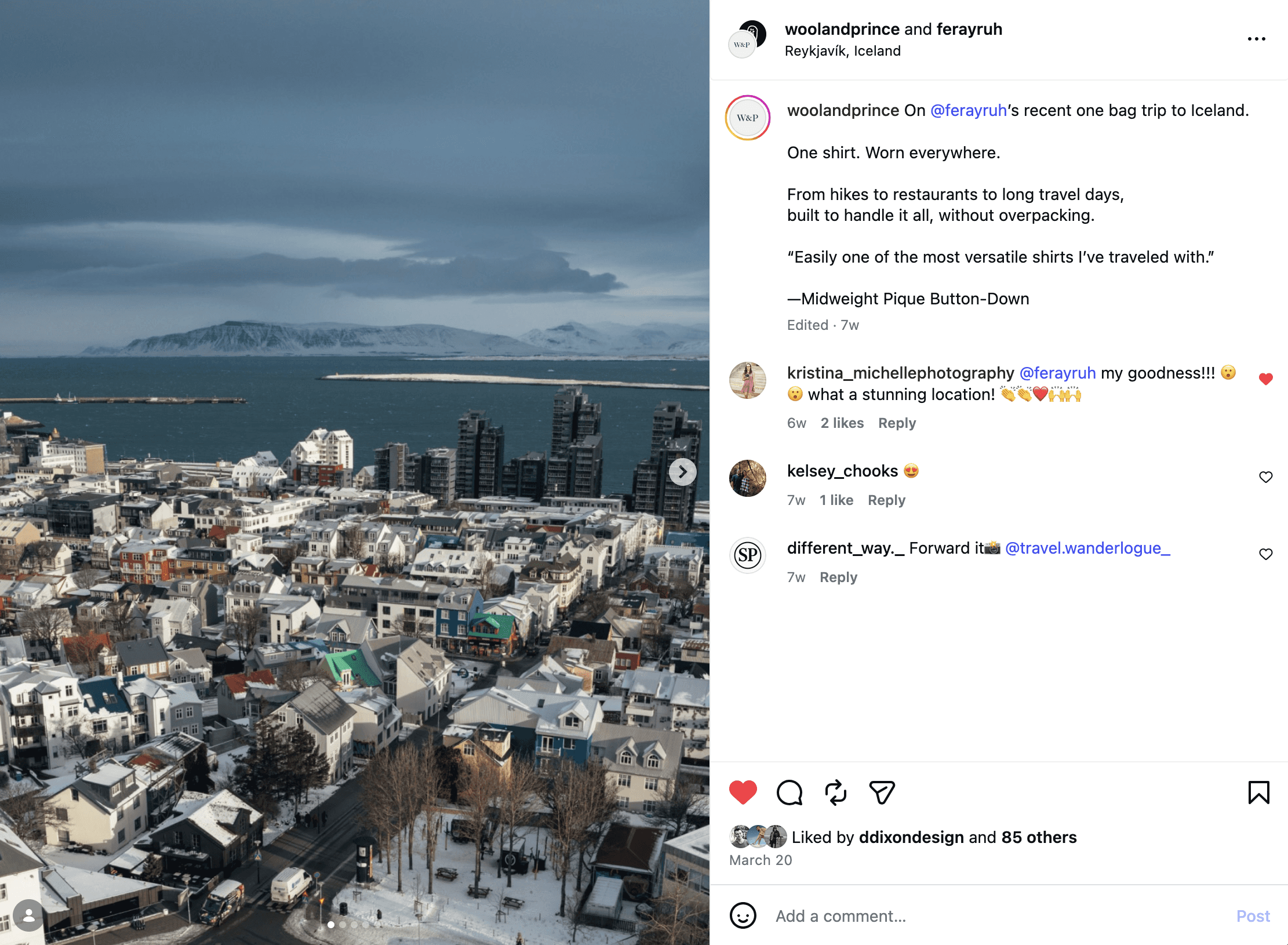
  • Field testing and evaluation of a “do-it-all” merino wool shirt from Wool & Prince across repeated travel and everyday use


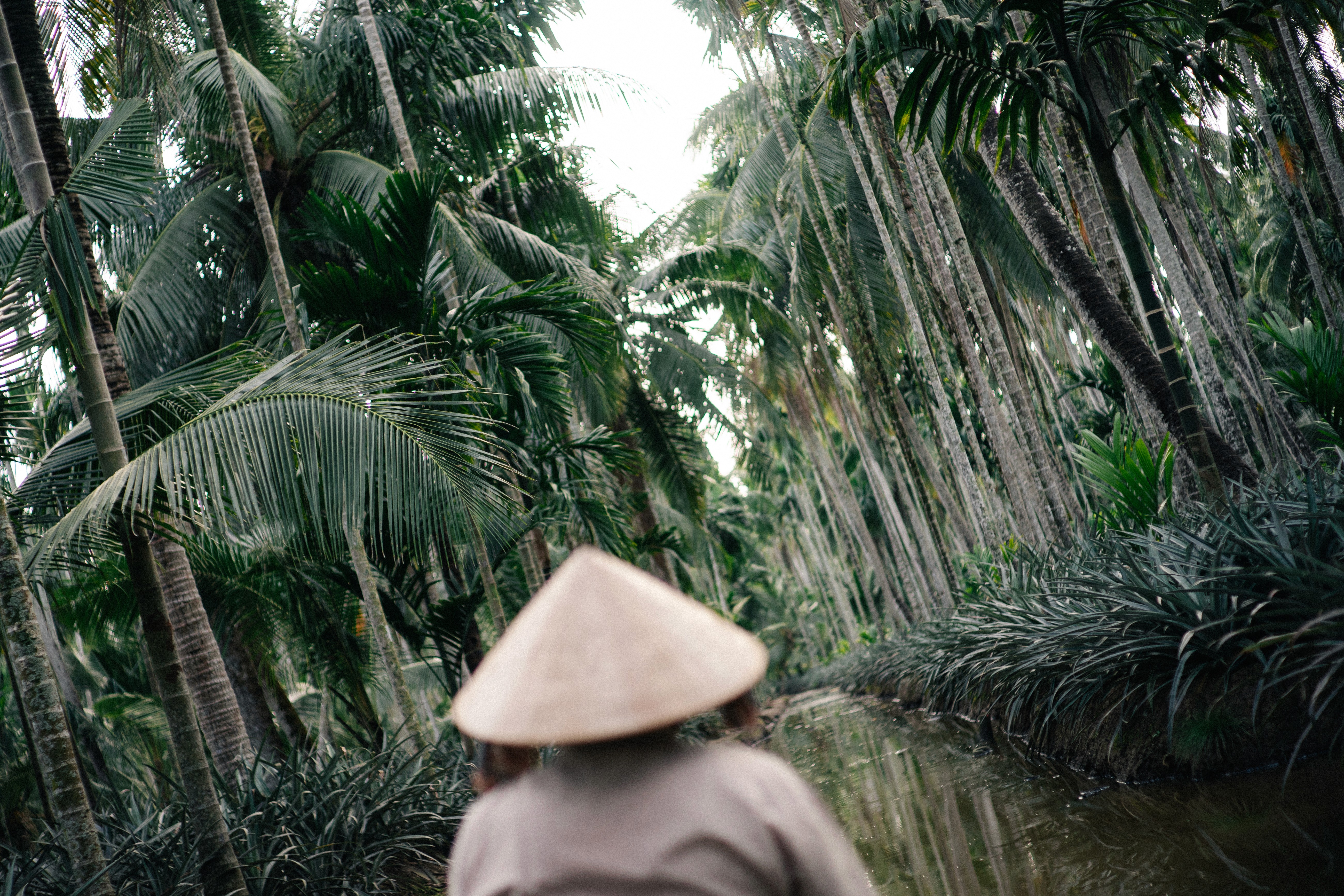
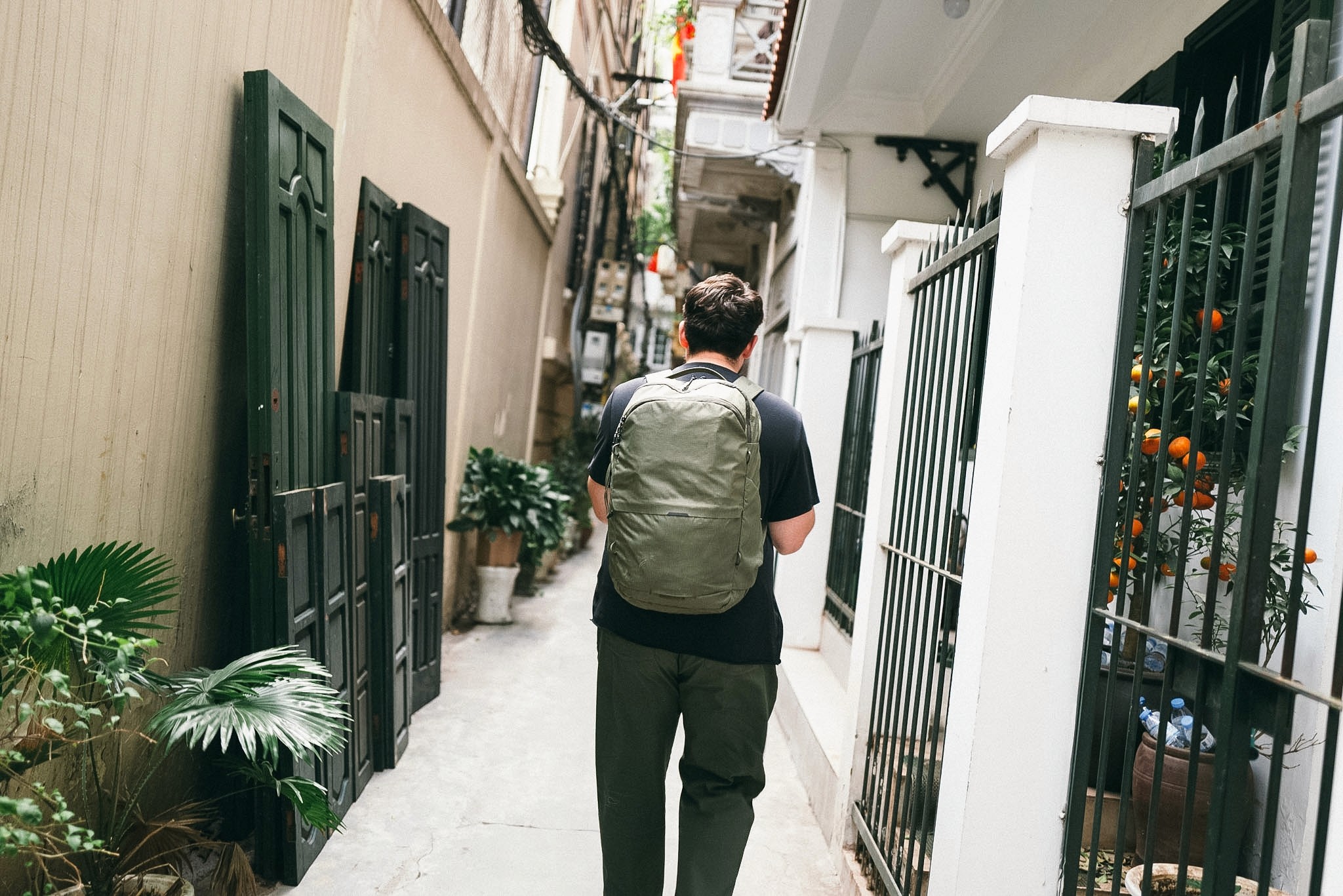
  • A long-form travel story for Pakt documenting a cross-country journey through Vietnam using a single backpack


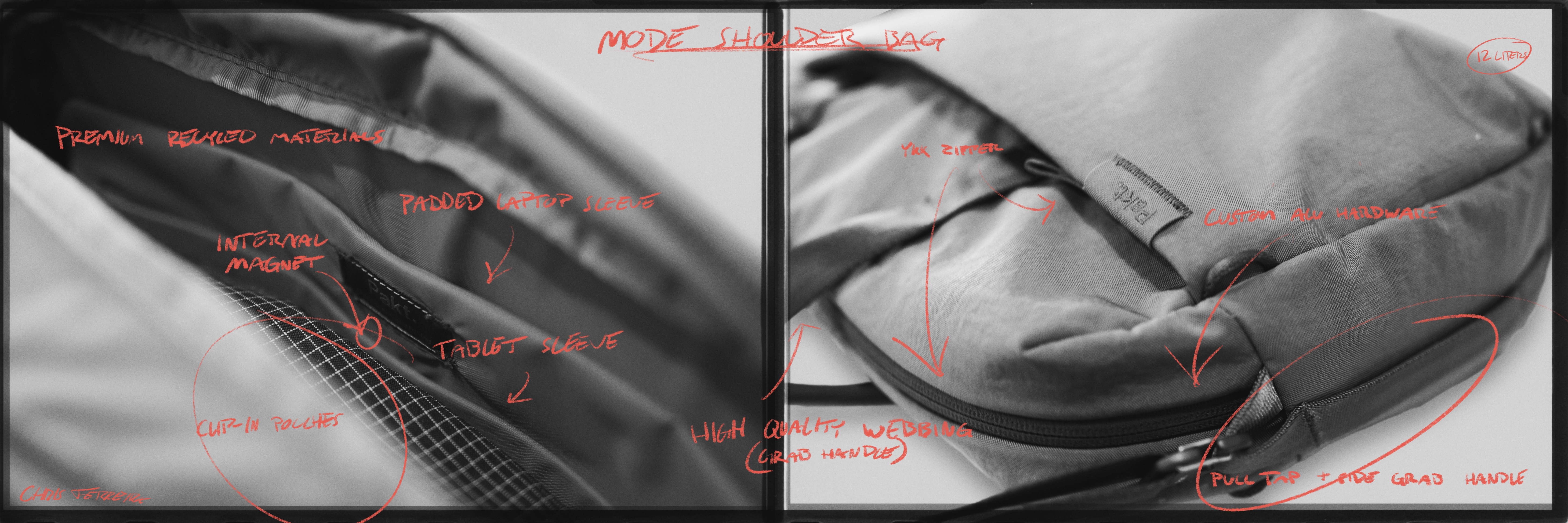
  • Creative direction and production of a short-form video advertisement for the Pakt sling


  • Multiple organically shared travel and onebag posts that have collectively reached nearly 1M views across online communities

Across these projects, I focus on how products perform beyond first impressions — through repetition, movement, environmental change, and lived experience over time.

Research Approach

Rather than evaluating products through short-term impressions, I document how they perform through repeated use across changing environments, routines, and travel conditions.

My process combines observational research, longitudinal testing, photography, and field notes collected during real-world movement — from dense urban travel to remote environments and long-term transit.

  • Longitudinal product testing

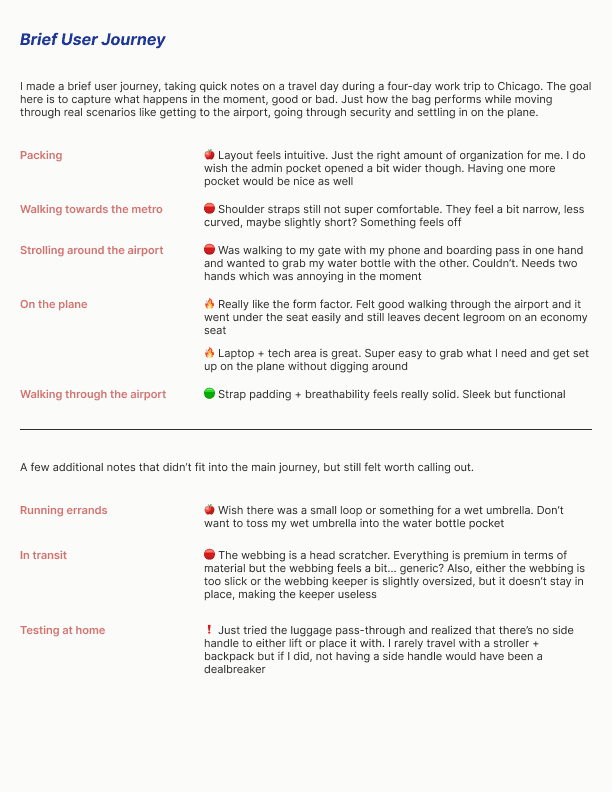
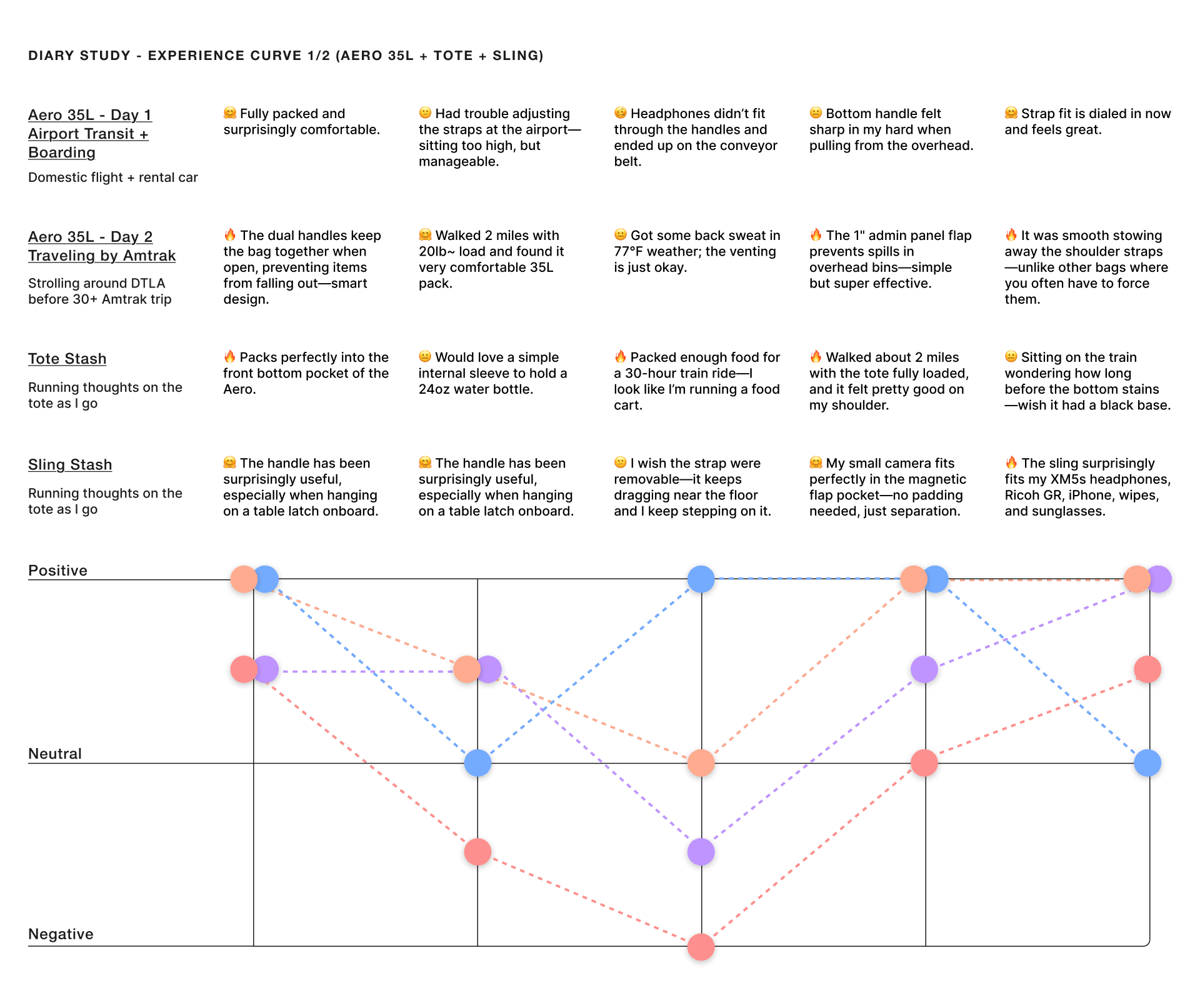
  • Diary-style field observations

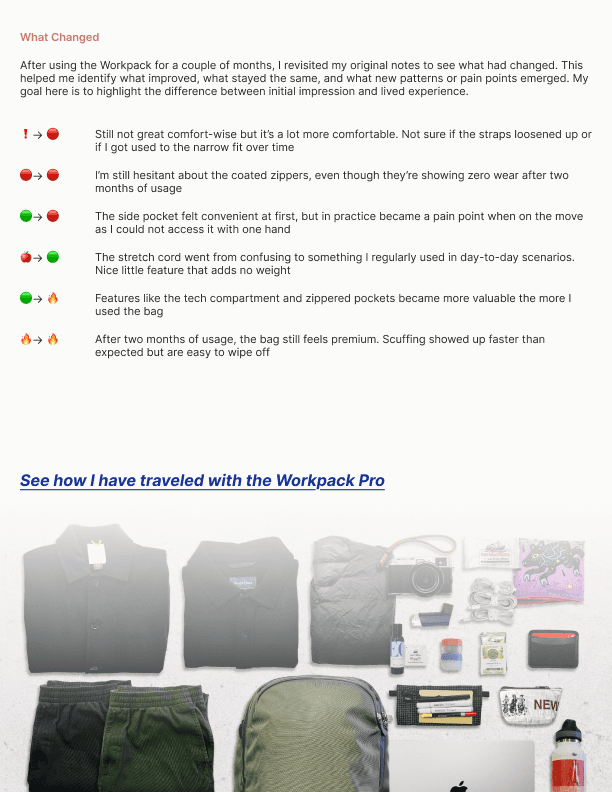
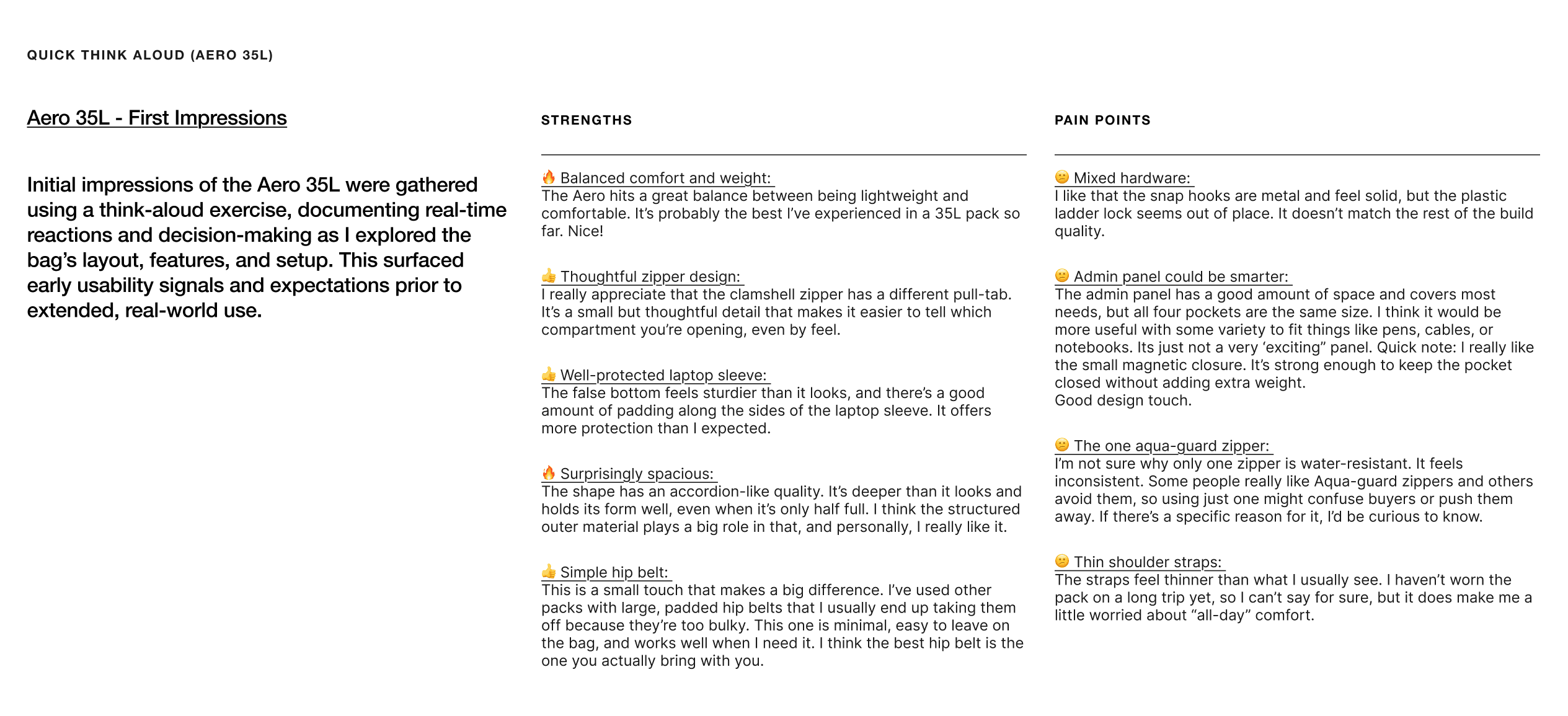
  • First impressions vs. long-term reassessment

  • Environmental stress testing

  • Behavioral friction analysis

  • Workflow and organization evaluation

  • Comparative product analysis

  • Accessibility & organization

  • Comfort & ergonomics

  • Adaptability across environments

  • Material durability over time

  • Cognitive load & usability

  • Packing workflows

  • Mobility and movement efficiency

Methods

Evaluation Areas

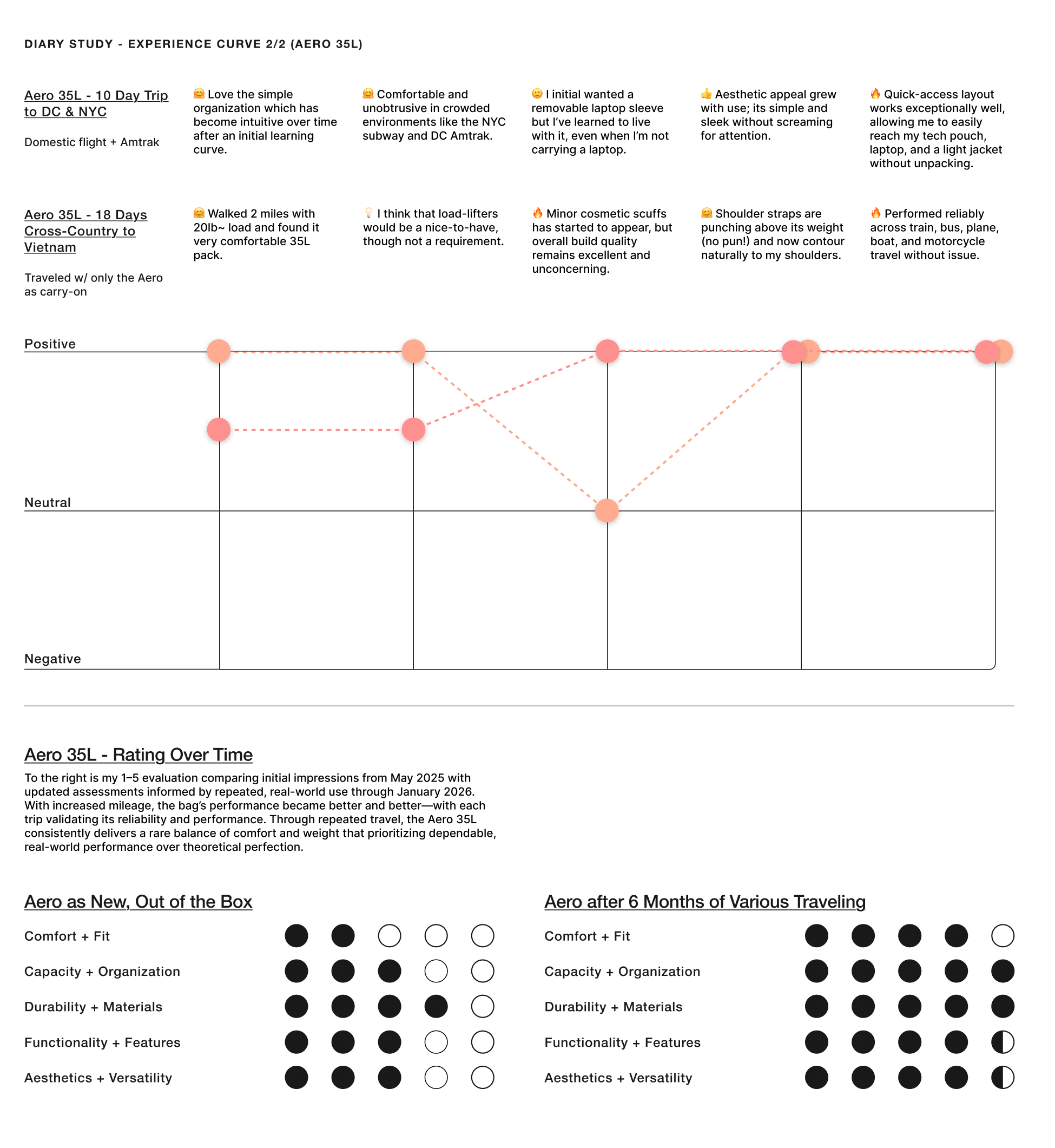
The Aero 35L was the primary focus of a longitudinal evaluation conducted across multiple trips over several months. Observations were captured in real time during daily use and travel, then synthesized to assess how performance and perception evolved over time. Lighter-touch observations were also collected for the sling and tote to contextualize the broader carry system, though the Aero remained the core of the study.

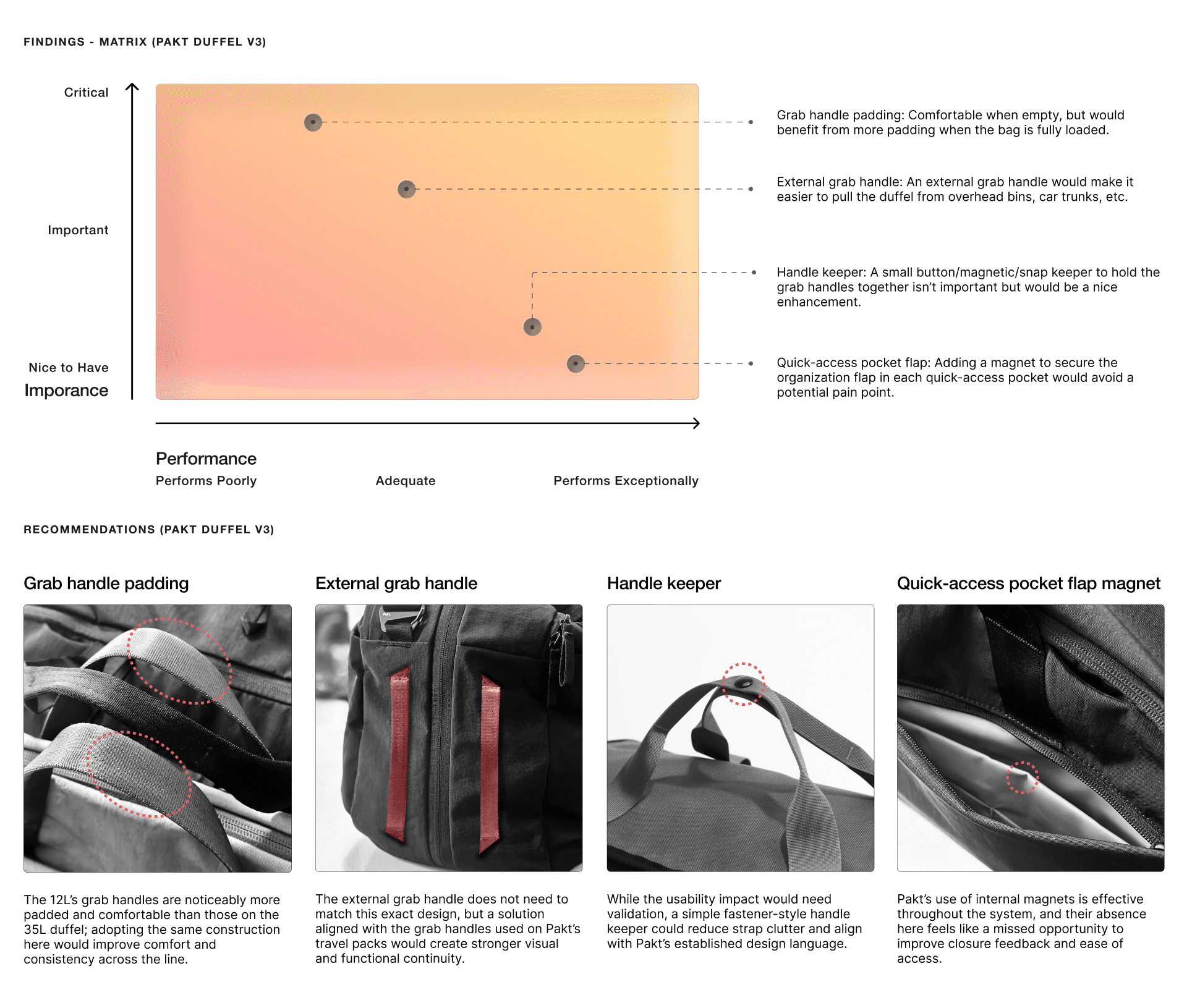
The Duffel v3 was evaluated as a pre-production model, limiting opportunities for real-world travel testing. Instead, I conducted a structured assessment using a findings matrix, documenting insights across critical, important, and nice-to-have categories, supported by visual recommendations to highlight opportunities for refinement.

Case Breakdown

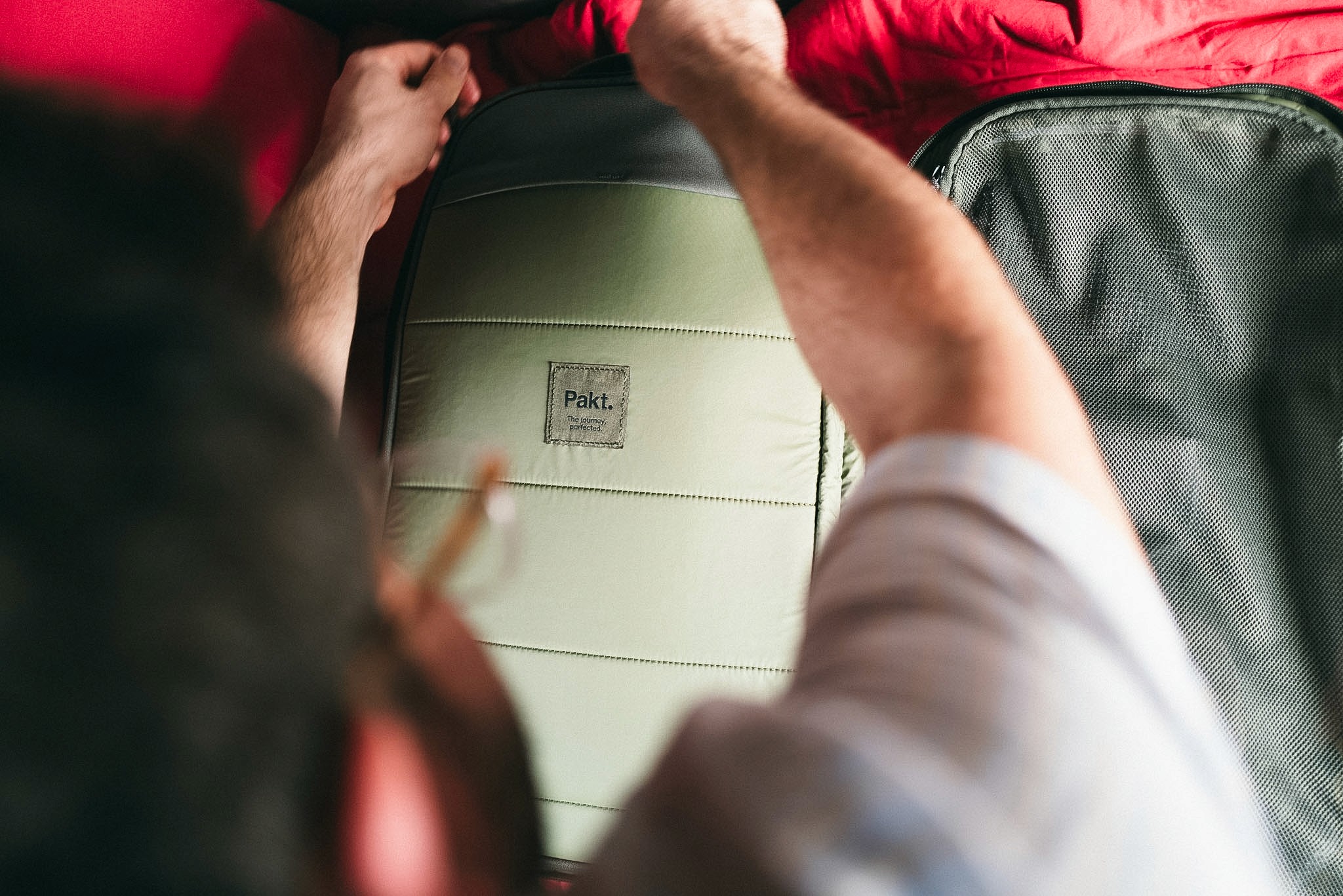
Aero Travel Backpack

Duffel Bag v3

Closing Thoughts

This project demonstrates the value of evaluating products beyond first impressions through sustained, real-world use.

Across nine months, I tested the system in a wide range of contexts—from international travel (Los Angeles, New York, DC, Vietnam, Iceland) to everyday routines like grocery runs, farmers markets, and weekly foosball nights. This breadth of use revealed how performance evolves over time, not just at first interaction.

By combining initial usability assessment with longitudinal, in-situ testing, I surfaced insights that only emerge through repetition—how comfort holds up, how access patterns change, and which features become essential versus incidental. The findings reinforced the importance of prioritizing comfort, durability, and versatility over theoretical optimization, resulting in recommendations grounded in lived experience rather than assumption.

“Chris applied UX research principles to physical products, bringing a structured, human-centered lens to product design. His work shows a clear understanding that products are part of a broader system that complements human behaviors, not isolated objects.”
-Founder, PB

“Chris applied UX research principles to physical products, bringing a structured, human-centered lens to product design. His work shows a clear understanding that products are part of a broader system that complements human behaviors, not isolated objects.”

-Founder, PB

“Chris applied UX research principles to physical products, bringing a structured, human-centered lens to product design. His work shows a clear understanding that products are part of a broader system that complements human behaviors, not isolated objects.”

-Founder, PB

Home

Next Project →


© 2025 All rights reserved


Sites

Work

Profile

Archive

Contact

Linkedin

Substack

Instagram